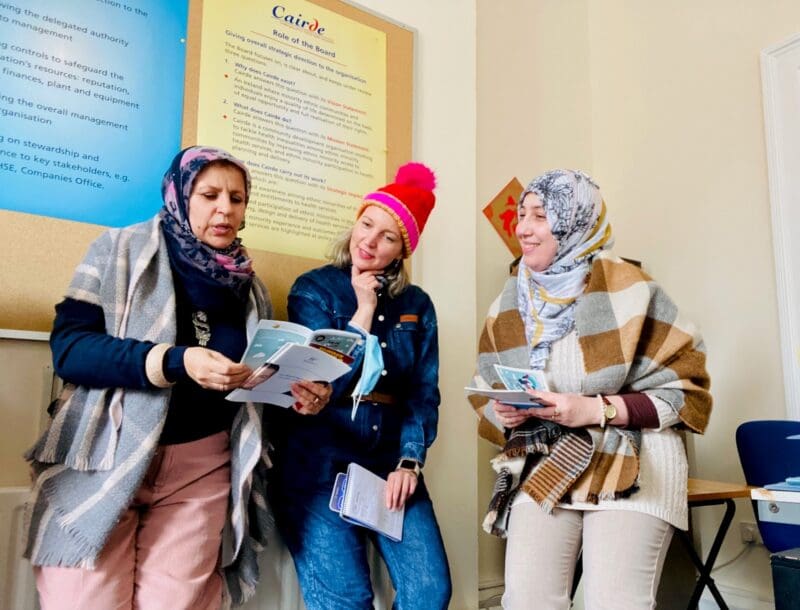
This report is one of the project’s main outputs and brings together national practices identified by the project partners—Klimaka (Greece), Cairde (Ireland), CESIS and CooperActiva (Portugal), and Sastipen (Romania)—as well as European and transnational practices considered relevant to the prevention of early marriage and early motherhood in Roma communities. The practices analysed vary considerably in nature, encompassing educational programmes, intercultural mediation, health promotion, peer support, participatory research, collaborative governance, the strengthening of Roma organisations and the development of public policies. This diversity represents one of the report’s main strengths, demonstrating that prevention does not depend on a single methodology but rather on the articulation of complementary responses operating at different levels of intervention.
Rather than presenting a catalogue of initiatives, this report seeks to identify the factors that make a practice particularly promising in this field and to explore elements that may be adapted and transferred to other national or local contexts. The comparative analysis shows that the most robust responses combine inclusive education, access to healthcare services, intercultural mediation, community participation, knowledge generation, the leadership of Roma women and participatory governance, in line with the most recent policy directions of the European Union and the Council of Europe for promoting the equality, inclusion and participation of Roma communities.